All posts by admin

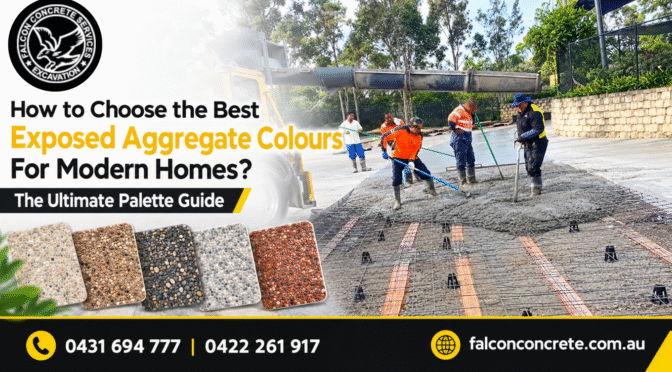
How to Choose the Best Exposed Aggregate Colours For Modern Homes? The Ultimate Palette Guide

Exposed aggregate finishes have revolutionised modern home design aesthetics across Australia. This decorative concrete solution combines functionality with stunning visual appeal seamlessly. Selecting the right colour palette requires understanding how different aggregate tones complement your architectural style. Your home’s outdoor spaces deserve careful consideration when choosing these beautiful finishing options.

Understanding Exposed Aggregate and Its Appeal

Exposed aggregate concrete features decorative stones and pebbles in a finished surface. The process reveals stunning natural colours beneath the concrete layer skilfully. This technique creates textured, visually interesting surfaces for driveways and patios. Modern homeowners increasingly prefer this option for both aesthetics and durability.

When exploring exposed aggregate in Sydney, you’ll discover why this finish remains popular. The natural stone variations offer unique personality to each installation completed. Colours range from warm earth tones to cool neutral shades beautifully. This versatility makes it perfect for contemporary home designs nationwide.

Popular Colour Palettes for Modern Homes

Warm Earth Tones

  • Cream and beige aggregate for welcoming outdoor spaces
  • Warm brown tones that complement timber elements
  • Rustic red hues for distinctive character and charm

Cool Neutral Shades

  • Grey and charcoal tones for sleek modern aesthetics
  • Pale concrete finishes for minimalist design approaches
  • Mixed neutral aggregates for sophisticated visual depth

Premium Options

  • Black granite aggregates for luxurious contemporary looks
  • Cream granite combinations for elegant refined finishes
  • Multi-tone blends for dynamic visual interest and sophistication

Colour Selection Factors to Consider

Architectural Style Compatibility

Your home’s architectural design should guide your colour choices. Modern minimalist homes suit cool grey and charcoal tones perfectly. Traditional designs work beautifully with warm beige and cream aggregates. Contemporary styles benefit from mixed-tone, innovative colour combinations displayed.

Climate and Sunlight Exposure

Sunlight significantly affects how colours appear throughout different seasons. Lighter aggregates reflect heat, keeping surfaces cooler in summer months. Darker tones absorb more heat, which impacts surface temperature readings. Consider shade patterns and direct exposure when selecting your palette.

Maintenance and Longevity

Lighter colours may show dirt and stains more visibly. Darker shades hide surface marks but can retain excessive heat. Medium tones provide excellent balance between visibility and practicality overall. When investigating exposed aggregate concrete in Sydney, ask about colour durability factors.

Working With Professional Contractors

Expertise in Colour Selection

Professional teams understand how different aggregates complement various architectural styles. They’ve completed numerous projects, gaining valuable experience with colour outcomes. Contractors can provide sample finishes for your personal review beforehand. Exposed aggregate contractors in Sydney offer consultation services for colour guidance specifically.

Cost Considerations

Budget planning is essential when choosing exposed aggregate finishes. The exposed aggregate cost in Sydney varies based on colour selection and complexity. Premium granite aggregates cost more than standard stone options available. Discussing budget with contractors helps you make informed financial decisions.

Installation Quality

Proper installation ensures colours remain vibrant throughout many years. Professional contractors use advanced techniques for optimal aggregate exposure standards. Quality workmanship prevents premature wear and colour fading significantly. Experienced exposed aggregate contractors in Sydney guarantee superior finished results always.

Design Inspiration for Your Space

Consider complementary landscaping when finalising your colour palette choice. Native plants paired with warm aggregates create harmonious garden settings. When planning projects using exposed aggregate concrete in Sydney, visualise how your landscape elements interact. Your colour choice should enhance your entire outdoor living environment thoughtfully.

Mixing aggregate finishes in different zones creates visual interest and function. Front driveways suit elegant neutral tones for sophisticated curb appeal. Backyard patios benefit from warmer tones encouraging relaxation and gathering spaces. This strategic colour zoning approach maximises both aesthetic and practical benefits significantly.

Investment Value and Long-Term Benefits

Quality exposed aggregate surfaces add genuine value to property investments. Buyers appreciate the combination of durability and attractive visual appeal offered. Projects featuring exposed aggregate in Sydney show excellent long-term value retention consistently. The low-maintenance concrete solution requires minimal upkeep compared to alternatives.

Colour fading occurs gradually over many years with quality installations. Sealing your exposed aggregate surface protects colours and extends longevity substantially. Professional contractors recommend regular maintenance schedules for optimal appearance preservation. Your investment continues looking fresh and beautiful with proper ongoing care.

Conclusion

Choosing the perfect exposed aggregate colour transforms your modern home’s outdoor spaces beautifully. Whether you prefer warm earth tones or cool neutrals, options exist for every style. Professional guidance ensures your colour selection complements your property perfectly.

Contact Falcon Concrete Services today to discover your ideal colour palette. Our experienced team specialises in stunning exposed aggregate installations throughout Australia. Call us at 0431 694 777 or 0422 261 917 for a free consultation. Email info@falconconcrete.com.au or visit https://www.falconconcrete.com.au/ to view our portfolio. Let us help transform your outdoor spaces with expert colour guidance and quality craftsmanship today.

Frequently Asked Questions

1. How long does exposed aggregate concrete typically last?

Quality exposed aggregate surfaces last 25–30 years with proper maintenance. Sealing protects the finish and extends its lifespan considerably.

2. Can exposed aggregate be installed in all Australian climates?

Yes, exposed aggregate works in all climate zones across Australia. Different aggregates suit various weather conditions and temperature ranges.

3. What’s the difference between exposed aggregate and regular concrete?

Exposed aggregate reveals decorative stones in the finish, while regular concrete remains plain. The exposed finish provides superior aesthetics and texture.

4. How do I maintain my exposed aggregate surfaces?

Sweep regularly and seal every 1–2 years for optimal protection. Avoid harsh chemicals that might damage the aggregate surface.

5. Can existing concrete be converted to exposed aggregate?

Yes, existing plain concrete can be ground to expose aggregate stones. This process is cost-effective and creates a stunning new finish.

6. What aggregate colours work best for small outdoor spaces?

Lighter colours make small spaces appear larger and more open. Cool tones create a feeling of spaciousness visually.

7. Is exposed aggregate slippery when wet?

No, the textured surface provides excellent grip and traction. The rough finish prevents slipping even during heavy rainfall.

8. How much does sealing exposed aggregate cost annually?

Sealing costs vary but typically range from moderate amounts for standard areas. Professional contractors can provide accurate quotes based on your space.

9. Can I combine multiple aggregate colours in one project?

Absolutely, many modern designs feature creative colour combinations beautifully. This approach adds visual interest and contemporary style.

10. How quickly does exposed aggregate installation complete?

Installation typically takes 5–7 working days depending on project size. Complex designs may require additional time for completion.

5 Ways a High-Quality Commercial Concrete Driveway Increases Property Value and Lease Rates

Your property’s driveway is more than just a parking surface. It’s a powerful investment tool that speaks volumes to tenants and visitors. A high-quality commercial concrete driveway in Kogarah signals professionalism, durability, and attention to detail. Excellent kerb appeal directly connects to higher property values, improved tenant satisfaction, and increased lease rates.

1. Enhances First Impressions and Kerb Appeal

The first impression starts the moment visitors arrive at your property. A well-maintained concrete surface tells tenants your property is professionally managed. Quality driveways create positive property perceptions that influence leasing decisions immediately. Studies confirm that attractive parking areas significantly increase tenant satisfaction. Your driveway frames your property’s entrance and sets expectations for quality. Professional appearance matters when competitive tenants choose between similar properties.

2. Increases Perceived Property Value and Investment Appeal

Property buyers and tenants assess value through visible condition clues. A high-quality commercial concrete driveway in Maroubra adds a tangible property value increase. Industry data commonly shows concrete driveways delivering strong returns (often in the 50–80% ROI range depending on finish and location). This makes concrete a smart commercial property investment choice. Properties with quality driveways sell and lease faster than competitors. Investors recognise that exterior quality directly impacts financial returns.

3. Offers Unmatched Durability and Low Maintenance Requirements

Concrete withstands heavy vehicle traffic, harsh weather, and constant wear. A properly installed commercial concrete driveway in Miranda lasts 25–40 years or more with good maintenance. This long-term durability means fewer repairs and lower maintenance costs. Tenants appreciate wear and tear resistance that minimises operational disruptions. Unlike asphalt requiring sealing every few years, concrete needs minimal attention. Quality concrete simply requires occasional cleaning and sealing every 5–10 years.

4. Boosts Tenant Retention and Renewal Rates

Tenant satisfaction directly impacts lease renewals and rental income stability. Quality outdoor spaces, including driveways, significantly influence tenant satisfaction levels overall. A high-quality commercial concrete driveway in Hurstville shows property maintenance commitment. Research indicates that higher tenant satisfaction is linked to improved lease renewal likelihood. Well-maintained properties attract quality tenants who value professional environments. Investing in visible improvements reduces turnover and vacancy rates considerably.

5. Improves Professional Appearance and Business Reputation

Your driveway reflects your brand’s professionalism to every client visiting. A high-quality commercial concrete driveway in Parramatta creates lasting positive impressions. Tenants prefer professional appearance standards that enhance their business reputation. This investment in quality surfaces demonstrates commitment to property excellence. Better-maintained properties command premium lease rates in competitive markets. Appearance quality influences tenant perception of overall property management standards.

Why Falcon Concrete Services Is Your Solution

Transforming your property into a high-value asset requires expert installation. Falcon Concrete Services specialises in delivering premium commercial concrete solutions. Our experienced team ensures quality workmanship that maximises your property’s return on investment. We understand how quality driveways enhance property appreciation and lease rates significantly.

Ready to increase your property’s value and lease potential?

Contact Falcon Concrete Services today for a consultation:

Invest in quality concrete today. Your property’s future value depends on it.

FAQs

1. How much does a commercial concrete driveway cost?

Commercial concrete driveways in the Sydney region typically cost 70–150+ per square metre installed, depending on thickness, reinforcement, finish (plain, coloured, exposed aggregate, stamped, etc.), site access, and preparation requirements. A typical project can range from several thousand to tens of thousands of dollars. Premium finishes or complex designs cost more but deliver greater aesthetic and long-term value. Always obtain a site-specific quote.

2. How long do quality concrete driveways last?

A properly installed and maintained concrete driveway lasts 25–40 years or longer, making it significantly more durable than asphalt alternatives. This longevity translates directly into long-term cost savings and reliable performance.

3. Does a concrete driveway really increase property value?

Yes. Quality concrete driveways improve kerb appeal and are widely recognised as a strong exterior investment. While exact returns vary by location, property type and market conditions, they commonly deliver solid ROI and can enhance both saleability and lease appeal.

4. How often should I maintain my commercial concrete driveway?

Basic maintenance includes regular cleaning and occasional sealing every 5–10 years (depending on the sealer type and traffic levels) to preserve appearance and protect the surface. This minimal maintenance schedule makes concrete one of the lowest-maintenance driveway options.

5. Can concrete driveways handle heavy commercial vehicle traffic?

Concrete is engineered to withstand heavy loads, frequent traffic, and harsh weather conditions. A properly designed slab of around 150 mm thickness with suitable reinforcement is commonly used for high-traffic commercial properties.

6. What’s the main difference between concrete and asphalt driveways?

Concrete lasts 25–40 years (or more) and requires minimal maintenance, while asphalt typically lasts 15–20 years and needs more frequent sealing and repairs. Concrete also offers better customisation options and excellent durability in Australian conditions.

7. Does a quality driveway actually affect tenant satisfaction?

Yes. Research shows quality outdoor and exterior spaces, including well-maintained driveways and parking areas, positively influence tenant satisfaction and can support higher lease renewal rates. Properties with professional exteriors tend to attract and retain quality tenants more effectively.

8. Can I customise the appearance of a concrete driveway?

Yes. Concrete offers multiple design options including stamped finishes, exposed aggregate, colour customisation, and decorative patterns. These options let you match your driveway to your property’s overall aesthetic and brand identity.

9. How do quality driveways impact commercial lease rates?

Properties with well-maintained, attractive driveways attract quality tenants willing to pay premium lease rates. First impressions matter significantly in commercial real estate, and professional-looking surfaces support higher rents in competitive markets.

10. What should I look for when choosing a concrete contractor?

Choose contractors with proven commercial experience, proper installation techniques, quality materials, realistic timelines, and warranty coverage. Ask for references from commercial properties and confirm they understand your property’s specific requirements and local conditions.

Concrete Driveway Maintenance Guide

A solid concrete driveway maintenance guide saves you thousands in premature repairs. With Sydney’s freeze-thaw swings and heavy clay soils, a bit of regular care goes a long way. Here’s everything you need to know, straight up.

Why Does Concrete Driveway Maintenance Matter?

Regular upkeep prevents cracking, staining and structural damage caused by Sydney’s shifting soil and weather. Skipping maintenance often means an early, costly concrete driveway replacement in Sydney instead of a simple fix.

How Often Should You Clean Your Concrete Driveway?

Give your driveway a proper clean every 3–6 months, or sooner if you notice oil stains or moss build-up.

  • Sweep away leaves, dirt and debris weekly
  • Use a pressure washer (low-medium setting) every season
  • Treat oil and rust stains with a degreaser within 24–48 hours
  • Avoid harsh acid cleaners on exposed aggregate driveway replacement Sydney surfaces, as they can strip the finish

When Should You Seal Your Driveway?

Reseal concrete every 2–3 years to protect against water penetration, UV damage and surface wear.

Sealing is one of the most cost-effective steps in any concrete driveway maintenance guide, particularly for homes near coastal or high-rainfall pockets of Sydney. A quality sealant reduces the need for early concrete driveway resurfacing in Sydney and keeps colour looking fresh.

What Causes Cracks in Concrete Driveways?

Cracks typically form from tree root movement, poor original drainage, ground shifting, or age-related wear.

Crack Type Likely Cause Recommended Fix
Hairline cracks Natural curing/shrinkage Monitor, seal
Spider cracks Surface stress, weather Patch repair
Wide/deep cracks Ground movement, tree roots Professional concrete driveway repair Sydney
Sunken sections Poor drainage, base failure Concrete driveway replacement with drainage Sydney

If cracks widen beyond 5mm or you notice pooling water, it’s time to call in driveway restoration Sydney specialists rather than DIY-ing it.

DIY Repair vs Professional Restoration: What’s Best?

Minor cracks and stains are fine for DIY; structural damage, drainage issues or crossover work need a licensed contractor.

DIY-friendly tasks:

  1. Filling hairline cracks with concrete filler
  2. Cleaning and resealing
  3. Weed removal from joints
  4. Spot-treating stains

Call a professional for:

  1. Concrete driveway restoration in Sydney on large damaged areas
  2. Concrete driveway replacement and crossover in Sydney (council approval often required)
  3. Drainage correction
  4. Structural resurfacing

How Much Does Concrete Driveway Maintenance Cost in Sydney?

Routine cleaning and sealing typically costs a few hundred dollars, while full restoration or replacement varies based on size, finish and drainage needs.

For an accurate concrete driveway cost in Sydney estimate, it’s best to get a site inspection, as slope, access and existing damage all affect pricing. A reputable concrete driveway company in Sydney that homeowners trust will always provide a transparent, itemised quote before starting work.

How Do You Prevent Future Damage?

Good drainage, regular sealing, and prompt crack repair are your best defence against costly future damage.

  • Ensure water flows away from the slab, not toward it
  • Avoid heavy vehicles parking on newer concrete (under 28 days)
  • Trim nearby tree roots
  • Address small cracks immediately before they spread

Finding the Right Local Help

Searching “driveway replacement contractors near me Sydney” is a smart first step when DIY isn’t cutting it. Look for licensed, insured contractors with verified reviews, clear warranties, and experience specific to Sydney’s soil and climate conditions — this is genuine local expertise you can trust.

Ready to Restore or Replace Your Driveway?

Don’t wait for small cracks to become expensive problems. Whether you need routine sealing, full concrete driveway restoration in Sydney, or a complete replacement, our local Sydney team at Falcon Concrete Services delivers reliable, council-compliant results. Get your free, no-obligation quote today and give your driveway the care it deserves.

FAQs

  1. How long does a concrete driveway last?
    With proper maintenance, a well-installed concrete driveway can last 25–30+ years.
  2. Can I reseal my driveway myself?
    Yes, for small residential driveways, though professional sealing gives a more even, longer-lasting finish.
  3. Is exposed aggregate harder to maintain than plain concrete?
    It requires slightly more careful cleaning but resists slipping and hides minor wear well.
  4. What’s the average cost of driveway resurfacing in Sydney? Costs vary by size and condition, so a personalised quote from a local contractor is recommended.
  5. Do I need council approval for driveway crossover replacement?
    Yes, most Sydney councils require permits for crossover and driveway replacement work.

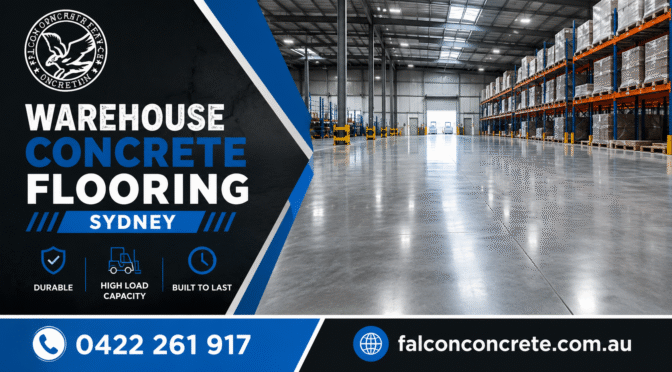
What Is the Cost Per Square Foot for Warehouse Concrete Flooring in Sydney?

“How much is this actually going to cost me?”

If you’re planning a new warehouse, upgrading an existing facility, or replacing a damaged floor, that’s probably the first question on your mind.

The short answer?

The cost of warehouse concrete flooring in Sydney typically ranges from $70 to $150+ per square metre, depending on the scope, site conditions, slab thickness, reinforcement, surface finish, and project complexity.

But here’s the problem.

Many warehouse owners focus only on the price per square foot and overlook the hidden costs that can turn a seemingly affordable project into an expensive headache.

Let’s break it down.

What Factors Affect the Cost of Warehouse Concrete Flooring in Sydney?

Not all warehouse floors are built the same.

Several factors can significantly influence pricing, including:

  • Concrete thickness
  • Site preparation requirements
  • Reinforcement materials
  • Ground conditions
  • Load-bearing requirements
  • Floor finishing techniques
  • Accessibility of the site
  • Drainage requirements
  • Curing time
  • Project size

A 200-square-metre warehouse and a 2,000-square-metre distribution centre will have completely different requirements.

The biggest mistake?

Assuming every quote should look the same.

Slab Thickness: The Hidden Cost Driver Most Owners Overlook

Your warehouse floor isn’t just a surface. It’s the foundation that supports your entire operation.

The required slab thickness depends on:

  • Forklift traffic
  • Racking systems
  • Heavy machinery
  • Pallet storage
  • Vehicle movement
  • Future expansion plans

Choosing a thinner slab to save money can lead to:

  • Cracking
  • Surface deterioration
  • Uneven flooring
  • Structural damage
  • Costly repairs

This is why experienced commercial concrete contractors in Sydney always assess operational requirements before providing a quote.

Don’t Compare Quotes Until You Compare What’s Included

A low quote can be tempting. But what exactly are you paying for?

Ask whether the quote includes:

  • Site excavation
  • Reinforcement installation
  • Concrete supply
  • Surface finishing
  • Expansion joints
  • Waste removal
  • Machinery costs
  • Labour
  • Project management

Comparing prices without comparing inclusions is like comparing apples with oranges.

When it comes to industrial concreting in Sydney, transparency matters just as much as pricing.

Is Polished, Burnished, or Heavy-Duty Concrete Worth the Extra Investment?

Many warehouse owners focus on installation costs and forget about long-term performance.

The right finish can improve:

  • Durability
  • Safety
  • Maintenance
  • Chemical resistance
  • Dust control
  • Equipment efficiency

High-performance concrete flooring can reduce maintenance costs for years.

That’s why warehouse concrete flooring in Sydney isn’t simply about pouring concrete. It’s about creating a surface that works as hard as your business does.

The Cheapest Quote Can Become the Most Expensive Decision

Poor concrete installation often leads to:

  • Premature cracking
  • Water penetration
  • Surface scaling
  • Trip hazards
  • Production disruptions
  • Unexpected repair bills

Partnering with reliable commercial concrete contractors in Sydney helps protect your investment and minimise future problems.

Ready to Get a Clear, Honest Quote?
Build a Stronger Foundation with Falcon Concrete Services

Whether you’re constructing a new warehouse, expanding your facility, or replacing an ageing floor, Falcon Concrete Services delivers durable, high-performance flooring solutions designed for Sydney businesses.

Get expert advice, transparent pricing, and a warehouse floor built to handle today’s demands and tomorrow’s growth. Contact our team today and take the guesswork out of your next concrete project.

Frequently Asked Questions

  • Does the age of a warehouse building affect concrete flooring costs?

Yes. Older warehouses often require additional surface preparation, structural assessments, or sub-base repairs before new concrete can be installed, which can increase the overall project cost.

  • Can a warehouse floor be designed to accommodate future automation systems?

Absolutely. Experienced commercial concrete contractors in Sydney can design flooring with future upgrades in mind, ensuring the slab can support automated storage systems, robotics, and heavier equipment if your operations expand.

  • Are concrete floors affected by seasonal temperature changes?

They can be. Sydney’s fluctuating temperatures may cause concrete to expand and contract, which is why properly designed control joints and curing methods are essential.

  • Is it possible to install warehouse flooring without completely shutting down operations?

In many cases, yes. Specialists in industrial concreting in Sydney can develop staged installation plans that allow certain sections of a warehouse to remain operational during the project.

  • Do different industries require different concrete specifications?

Definitely. A warehouse used for food storage has very different flooring requirements from one used for manufacturing, logistics, or chemical processing.

  • Can the colour of a warehouse floor improve workplace efficiency?

Surprisingly, yes. A qualified team specialising in warehouse concrete flooring in Sydney can incorporate line markings, designated traffic zones, and surface treatments that improve visibility, organisation, and workplace safety.

  • How long should a newly installed warehouse floor be left before placing heavy equipment on it?

The timeline depends on the concrete mix, slab thickness, environmental conditions, and load requirements. Rushing the process can compromise the floor’s long-term strength.

  • Is laser screeding necessary for every warehouse concrete project?

Not always. Laser screeding is particularly beneficial for large warehouses that require extremely flat surfaces for high-bay racking systems, automated equipment, or constant forklift traffic.

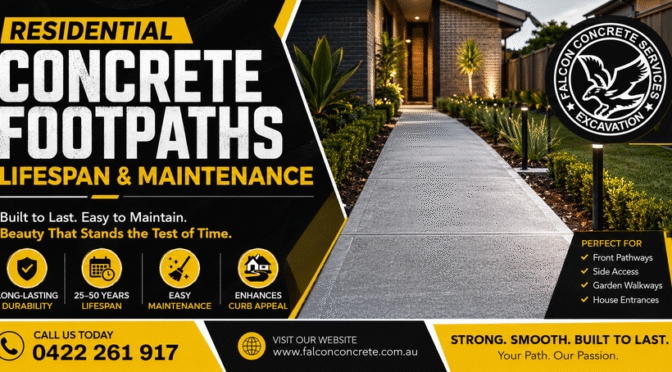
What’s the Lifespan of Residential Concrete Footpaths?

Concrete footpaths are a popular choice for Australian homeowners seeking durable outdoor surfaces. Understanding their expected lifespan helps you make informed decisions about installation and maintenance. Whether you’re considering a new pathway or evaluating an existing one, knowing what affects longevity is crucial. 

This guide explores everything you need to know about residential concrete footpaths in Fairfield durability.

Expected Lifespan of Concrete Footpaths

Well-constructed concrete footpaths typically last between 25 and 50 years. However, this range varies significantly based on several factors. Quality materials and proper installation techniques greatly influence durability. Environmental conditions and regular maintenance also play critical roles in determining longevity.

Concrete footpath installation in Liverpool standards ensures pathways meet Australian building codes for residential applications.

Factors Affecting Concrete Footpath Longevity

Climate and Weather Exposure

  • Freeze-thaw cycles can cause surface deterioration over time
  • Excessive moisture leads to concrete degradation and weakening
  • UV exposure may cause surface discolouration and minor cracking
  • Temperature fluctuations create expansion and contraction stress

Installation Quality

Proper site preparation forms the foundation of long-lasting pathways. Adequate base compaction prevents settling and cracking issues later. Using appropriate concrete mix ratios ensures optimal strength and durability. Professional installation techniques significantly extend the pathway’s functional life.

Residential concrete footpaths in Fairfield projects demonstrate how quality workmanship impacts long-term performance.

Signs Your Footpath Needs Attention

  • Visible cracks wider than 3mm require professional assessment
  • Surface spalling or flaking indicates underlying structural issues
  • Uneven sections create tripping hazards and drainage problems
  • Efflorescence suggests moisture-related deterioration within the concrete

Maintenance Practices to Extend Lifespan

Regular Cleaning: Remove debris and organic matter that retains moisture against surfaces. Pressure washing annually prevents algae growth and surface staining. Clearing drainage pathways ensures water doesn’t pool on surfaces.

Sealing and Protection: Apply quality concrete sealers every 2-3 years for optimal protection. Sealants prevent water penetration and reduce surface erosion significantly. Choose products suitable for Australian climate conditions and foot traffic.

Concrete footpath construction in Cabramatta guidelines recommend proactive maintenance scheduling for residential properties.

Common Lifespan Reducers

Factor

Impact on Lifespan

Poor drainage

Reduces lifespan by 30-40%
Tree root intrusion

Can cause premature failure

Heavy vehicle traffic

Accelerates surface wear

Inadequate thickness

Leads to early cracking

Professional Assessment Value

Engage qualified professionals for structural inspections every 5-10 years. Early detection of issues prevents costly repairs down the track. Expert evaluations identify problems invisible to untrained eyes. Professional advice guides appropriate maintenance and repair decisions.

Falcon Concrete Services is a name you can trust to offer excellent concrete footpath installation in Liverpool. We have a team of experienced and skilled technicians to deliver flawless results. Connect with us for a free quote.

Maximising Your Investment

Choose experienced contractors who understand Australian Standards for concrete work. Invest in proper subgrade preparation and adequate thickness specifications. Consider reinforcement options like steel mesh for enhanced durability. Request detailed warranties covering workmanship and material quality.

Quality concrete pathways represent excellent value when properly installed and maintained. Following recommended care practices ensures your footpath remains functional for decades. Regular attention prevents minor issues from becoming major problems.

Take Action Today

Ready to install a durable concrete footpath or assess your existing pathway? Contact qualified concrete specialists who understand Australian conditions. Professional guidance ensures your footpath investment delivers maximum lifespan and value. Don’t wait until minor issues become costly repairs.

Falcon Concrete Services is a name you can trust to offer excellent concrete footpath installation in Liverpool. We have a team of experienced and skilled technicians to deliver flawless results. Connect with us for a free quote. 

Frequently Asked Questions

Q: Can concrete footpaths last longer than 50 years?

 Yes, with exceptional maintenance and favourable conditions, some pathways exceed 60 years of service.

Q: Does coloured concrete have a different lifespan? 

Coloured concrete has similar durability, although surface pigments may fade over time, requiring reapplication of sealant.

Q: How thick should a residential footpath be? 

Standard residential pathways require a thickness of 75-100mm for adequate load-bearing capacity.

Q: When is complete replacement necessary? 

 Extensive cracking, significant settling, or widespread surface deterioration typically warrant full replacement.

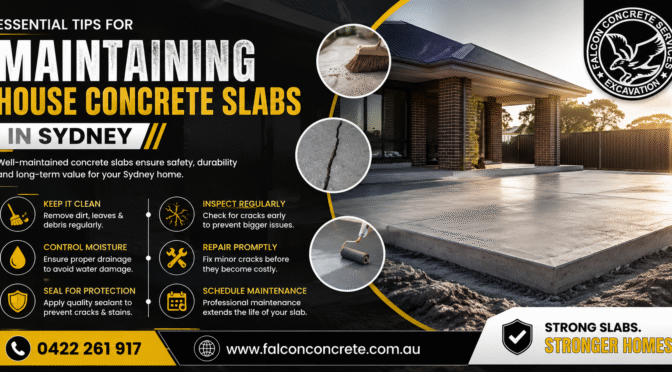
How to Maintain Concrete House Slabs in Sydney for Longevity?

Owning a home means protecting its foundation from the ground up. For properties built using Concrete House Slabs Sydney, the battle against our harsh climate is constant. Proper care ensures these foundations remain strong against cracking and dampness for decades. This guide provides the essential steps for longevity, focusing on the specific needs of house concrete slab construction in Sydney.

Seal to Defeat Moisture Intrusion

Moisture is the primary enemy of any slab. In Sydney’s environment, waterproofing is non-negotiable for longevity.

  • Apply Penetrating Sealers: Use a high-quality reactive penetrating sealer. It strengthens the concrete from within.
  • Focus on the Perimeter: Seal the edges where the slab meets the garden. This blocks moisture ingress effectively.
  • Reapply Regularly: Reseal outdoor slabs every 2-3 years to maintain protection.

Control Cracking with Joints

Concrete naturally shrinks as it cures, leading to stress points. House concrete slab construction in Sydney relies on strategic joints to manage this.

  • Respect the Joints: Never drill or cut new joints into an existing slab without professional advice.
  • Monitor Joint Width: Check if existing construction joints are widening. This signals sub-grade movement.
  • Keep Joints Clean: Remove dirt and weeds to prevent pressure build-up that causes spalling.

Manage Drainage Relentlessly

Poor drainage is the fastest route to slab failure. Water pooling against the foundation leads to soil erosion and settlement.

  • Grade the Soil: Ensure the ground slopes away from the slab by at least 150mm.
  • Clean Gutters: Divert rainwater away to prevent overflow soaking the foundations.
  • Use Trench Drains: For paved areas adjacent to the slab, consider trench drains to capture surface water.

Routine Inspections and Cleaning

Consistent maintenance prevents minor issues from becoming major structural problems.

  • Look for Rust Stains: Rust indicates concrete cancer—steel reinforcement corroding inside the slab.
  • Check for Unevenness: Monitor for sinking or lifting sections, which pose a tripping hazard.
  • Use pH-Neutral Cleaners: Avoid harsh acids that etch the surface when washing the slab.

Contact  Falcon Concrete Services to ensure your concrete house slabs in Sydney remain durable for the long haul.

Professional Remedial Action

When damage appears, quick fixes often fail. Superficial patching traps moisture and accelerates decay.

  • Don’t Just Patch: A professional concrete house slab installation in Sydney expert will perform a breakout to remove unsound material.
  • Treat the Steel: Exposed rebar must be cleaned and primed to stop corrosion.
  • Get a Specification: Always demand a scope of work that details the remedial process.

Ensure Your Slab Stands Strong

Don’t wait for small cracks to turn into costly structural failures. Protect your property value by scheduling a professional assessment today. Contact  Falcon Concrete Services to ensure your concrete house slabs in Sydney remain durable for the long haul.

Don’t wait! Just call us at 0431 694 777 for a quick discussion!

Frequently Asked Questions (FAQs)

  1. How often should I seal my concrete house slab in Sydney?
    For exposed outdoor slabs, sealing every 2 to 3 years is recommended. Indoor polished slabs may last longer between seal applications.
  2. What is the main cause of cracks in Sydney house slabs?
    The primary cause is drying shrinkage combined with excess water in the original mix, or poor sub-grade preparation, leading to settlement.
  3. Are hairline cracks in my slab a serious concern?
    Generally, hairline cracks are cosmetic. However, if a crack is wider than a credit card or shows signs of rising moisture, it requires professional inspection.
  4. How does drainage affect my concrete slab’s lifespan?
    Poor drainage causes soil erosion and hydrostatic pressure. This can lead to uneven settlement and water seepage through the slab.
  5. Can I just patch a spalling area myself?
    DIY patching is often a temporary cover-up. It hides the underlying issue, usually concrete cancer, allowing corrosion to worsen unseen.

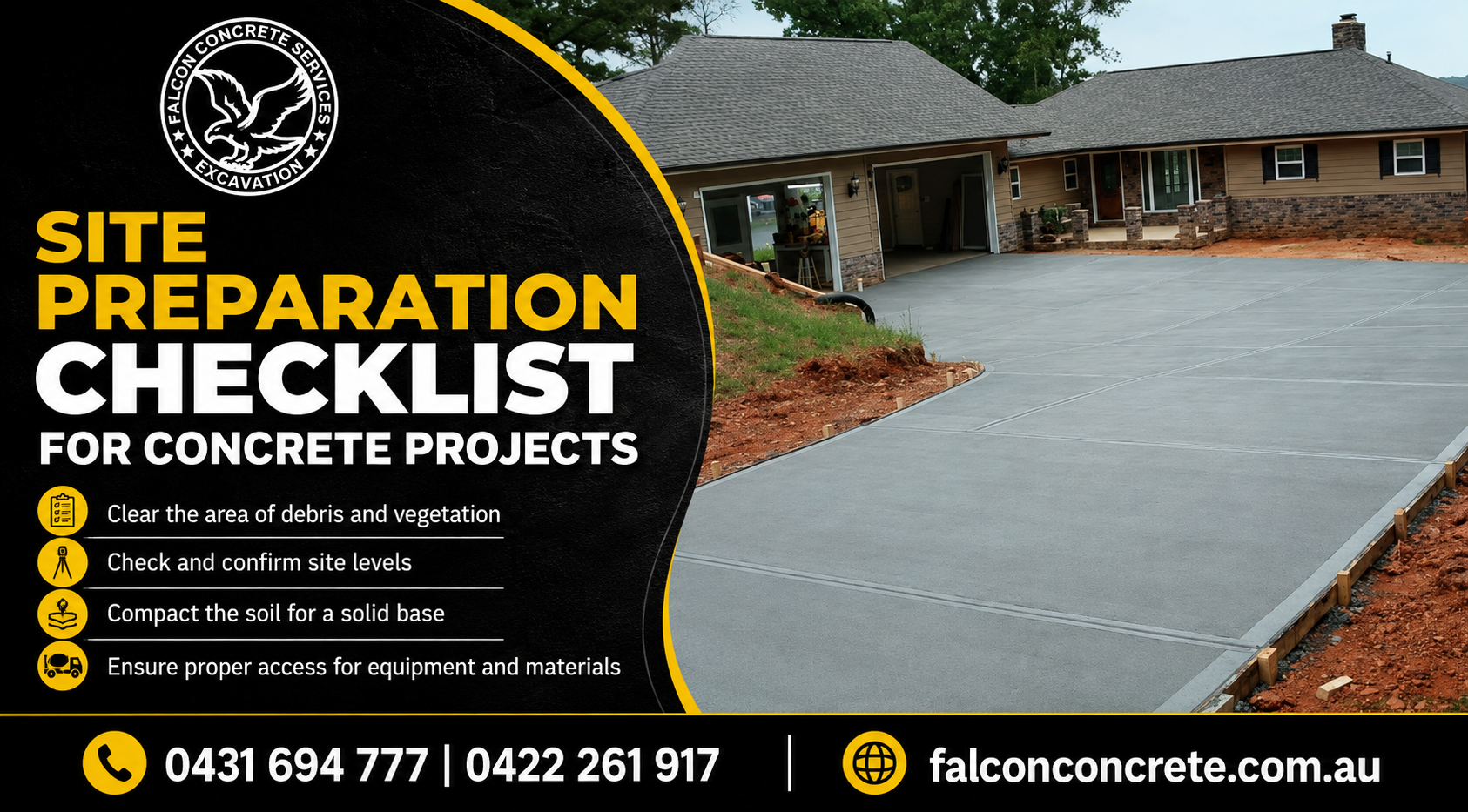
Site Preparation Checklist For Concrete Projects

A stunning finish starts long before the concrete is poured. Proper site prep determines whether your decorative concrete driveways in Sydney project lasts decades or cracks within a year.

Here’s the exact checklist trusted decorative concrete contractors in Sydney use before every pour.

Why Does Site Preparation Matter So Much?

Poor site prep is the leading cause of cracking, pooling water, and uneven concrete finishes in Sydney. Getting the groundwork right protects your investment and guarantees a smoother, longer-lasting surface.

Step 1: Site Assessment and Soil Testing

Before any decorative concrete installation in Sydney begins, the ground itself needs checking.

  • Test soil type (clay, sand, or loam) for stability
  • Check for reactive soils common across Sydney suburbs
  • Identify drainage patterns and water table depth
  • Mark existing underground services (gas, water, electrical)

Soil testing prevents future subsidence and cracking, especially important for Sydney’s variable clay-heavy soils.

Step 2: Clearing and Excavation

The site must be cleared of vegetation, debris, and old concrete before excavation begins.

  1. Remove grass, roots, and topsoil
  2. Excavate to the correct depth (typically 100–150mm for driveways)
  3. Dispose of spoil responsibly
  4. Level the base using a laser level or string line

This step is critical for both residential decorative concrete driveways in Sydney and commercial decorative concrete Sydney projects, where uneven excavation leads to pooling and premature wear.

Step 3: Base Preparation and Compaction

A well-compacted base is the single biggest factor in preventing cracks and sinking.

Base Layer Purpose Typical Depth
Crushed rock/road base Load-bearing support 75–100mm
Sand bedding Even surface for formwork 25–50mm
Compaction Prevents settling Compacted to 95%+ density

Professional concrete overlays in Sydney and resurfacing jobs also require this base check if the existing slab shows movement.

Step 4: Formwork and Edge Restraints

Formwork shapes the pour and holds patterned concrete in Sydney designs in place while curing.

  • Use straight, level timber or steel forms
  • Secure edges with stakes every 600–900mm
  • Double-check measurements against the design plan
  • Allow for expansion joints at correct intervals

Step 5: Drainage Planning

Calculating the gradient for ground work is crucial. Concrete must fall away from structures at a minimum 1:100 gradient to prevent water damage.

  • Slope driveways and pathways away from the home
  • Install stormwater drainage points where required
  • Avoid low spots that trap water and stain decorative finishes

Step 6: Weather and Timing Considerations

Sydney’s unpredictable weather can affect curing time and finish quality.

  • Avoid pouring during heavy rain or extreme heat
  • Plan around forecast wind, which speeds up surface drying
  • Schedule concrete sealing Sydney only after full cure (usually 28 days)

Step 7: Reinforcement and Mix Selection

  • Add steel mesh or fibre reinforcement for structural strength
  • Choose the right mix design for decorative concrete resurfacing or fresh pours
  • Confirm additives for colour, texture, or concrete polishing Sydney compatibility with the base mix

What Happens If Site Prep Is Skipped?

Skipping proper preparation leads to cracking, uneven settling, water pooling, and a finish that fails well before its expected lifespan.

Choosing the Right Team for the Job

Experienced decorative concrete contractors in Sydney manage soil testing, drainage, compaction, and finish selection as one coordinated process. Whether it’s decorative concrete resurfacing or polished commercial floors, prep work separates a five-year fix from a twenty-year investment.

Ready to Start Your Project the Right Way?

Don’t risk cracks, pooling, or a finish that fades fast. Talk to Sydney’s trusted decorative concrete contractors in Sydney like Falcon Concrete Services for a free site assessment and quote — from premium finishes, we get the groundwork right the first time. Call now or request your free quote online.

Frequently Asked Questions

1. How long should site prep take before pouring decorative concrete?

Most residential sites need 1–3 days for clearing, excavation, and base compaction before pouring.

2. Can decorative concrete be installed over an old driveway?

Yes, through concrete overlays in Sydney or resurfacing, provided the existing slab is structurally sound.

3. What soil types cause the most problems in Sydney?

Reactive clay soils are the biggest concern, as they expand and contract with moisture changes.

4. How soon can I seal new decorative concrete?

Sealing should generally wait until the concrete has fully cured, around 28 days after pouring.

5. Do I need council approval for a new decorative driveway?

Many Sydney councils require approval for driveway crossovers, so it’s worth checking before work begins.

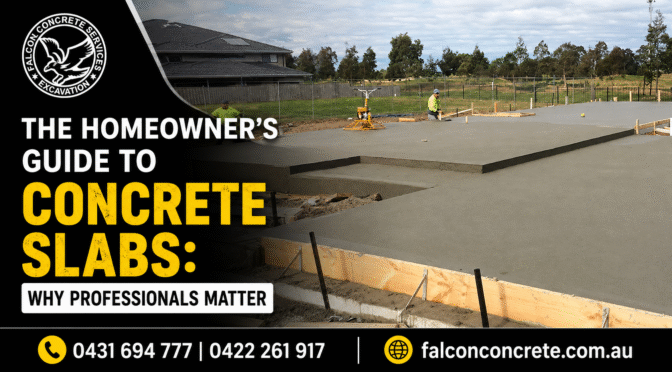
The Homeowner’s Guide to Concrete Slabs: Why Professionals Matter

Concrete slabs form the foundation of countless homes today. They provide structural support, durability, and longevity. Understanding their importance helps you make informed decisions. Professional installation ensures your investment remains solid for decades.

What Are Concrete Slabs and Why Do They Matter?

A concrete slab is a flat, horizontal surface of reinforced concrete. These structures support your entire home’s weight and contents. They protect against moisture, pests, and ground settling issues. Proper installation affects your home’s value and safety significantly.

Key Benefits of Quality Concrete Slabs

  • Durability: Well-installed slabs last fifty years or longer.
  • Cost-Effectiveness: They’re more affordable than traditional foundations.
  • Moisture Protection: Concrete prevents water damage and mould growth.
  • Stability: Proper slabs minimise foundation movement and cracks.

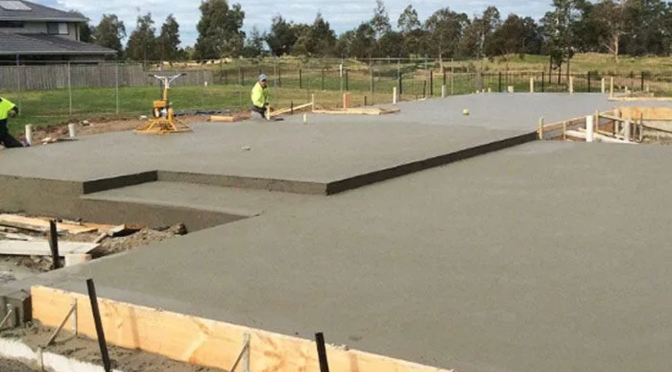
Concrete house slabs installed by Falcon Concrete Services for durable residential foundations

Why Professional Installation Matters

Structural Integrity

Concrete house slabs in Marsfield require expert assessment of soil conditions. Professionals evaluate ground stability before pouring. They ensure proper drainage systems are in place. This prevents costly damage over time.

Expertise and Knowledge

Qualified installers understand building codes and regulations thoroughly. They know the proper reinforcement requirements for your region. Professionals use correct concrete mixes for durability. Their experience prevents common mistakes homeowners make.

Equipment and Tools

Professional teams have specialised machinery for installation. They ensure consistent thickness across the entire surface. Quality equipment produces superior finishes and longevity. This investment in proper tools saves you money.

The Installation Process

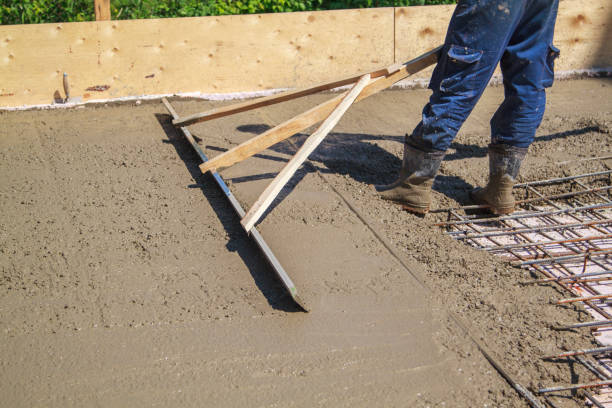
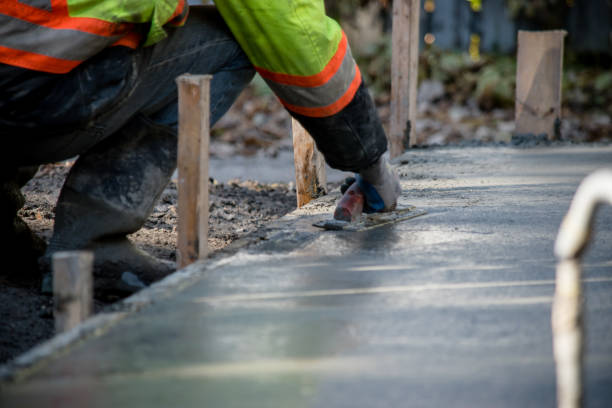
House concrete slab construction in Parramatta involves several critical steps. First, professionals prepare the ground correctly. They install proper drainage and moisture barriers. Next, they set up reinforcement frameworks carefully.

Steps Professional Contractors Follow

  1. Site evaluation and soil testing
  2. Ground preparation and compaction
  3. Placement of moisture barriers
  4. Reinforcement installation
  5. Concrete pouring and finishing
  6. Curing and quality inspection

Common Issues Homeowners Face

Improper installation leads to numerous problems over time. Cracks develop when concrete isn’t poured correctly. Uneven settling causes structural concerns and door issues. Foundation failure becomes expensive when ignored initially.

Concrete house slab installation in Blacktown by experienced professionals prevents these issues. They understand climate considerations and soil challenges. Professionals implement solutions before problems emerge.

Cost Considerations

Professional installation may seem expensive initially. However, it saves thousands in repairs later. Poor installations cost significantly more to fix. Quality work protects your home’s resale value effectively.

Concrete house slab contractors in Penrith provide transparent pricing for services. They explain what your investment includes. Avoiding professionals creates hidden costs over the years. Budget for quality installation rather than cheap alternatives.

Choosing the Right Professional

Important Qualities to Seek

  • Licensed and insured contractors with credentials
  • Years of experience in foundation work
  • Positive customer reviews and references
  • Clear communication about timelines and costs
  • Written contracts with warranty information

House concrete slab services in Castle Hill should include ongoing support. Ask about warranties for your peace of mind. Professionals stand behind their completed work confidently.

Conclusion

Your home’s concrete slab is fundamental to everything above it. Professional installation ensures decades of reliable performance. Quality work protects your investment and family safety. Don’t compromise on this critical foundation element.

Ready to Protect Your Home’s Foundation?

Contact Falcon Concrete Services today for expert concrete slab solutions. Call 0431 694 777 or 0422 261 917. Email your questions to info@falconconcrete.com.au. Visit https://www.falconconcrete.com.au/ for more information. Let professionals handle your foundation concerns properly.

Frequently Asked Questions

1. How long do concrete slabs typically last?

Quality concrete slabs can last 50–100 years with proper maintenance. Poor installation may require repairs within 10–15 years.

2. What causes cracks in concrete slabs?

Cracks result from improper pouring, inadequate reinforcement, or ground settling. Professional installation and maintenance prevent most cracking issues.

3. Can I install a concrete slab myself?

DIY installation often leads to costly mistakes and structural problems. Professional contractors have equipment, expertise, and insurance coverage.

4. What’s the difference between concrete slabs and other foundations?

Slabs are cost-effective and moisture-resistant foundations that sit directly on the ground. Traditional foundations use deeper footings below frost lines.

5. How much does professional concrete slab installation cost?

Costs vary based on size, location, and soil conditions. Professional contractors provide accurate quotes after a site assessment.

6. What maintenance do concrete slabs require?

Regular sealing, crack monitoring, and drainage maintenance extend slab life. Professional inspections identify potential issues early.

7. Are concrete slabs suitable for all climates?

Professionals design slabs for specific climate conditions and soil types. Proper installation ensures performance in any environment.

8. How long does concrete slab installation take?

Most projects take one to two weeks from start to finish. Curing time requires patience before using the finished surface.

9. What should I do if my slab develops cracks?

Have professionals inspect cracks to determine severity and cause. Early repairs prevent water damage and structural deterioration.

10. Do concrete slabs require permits and inspections?

Building codes require permits and inspections in most areas. Professional contractors handle all regulatory requirements automatically.